Abstract vs Realistic Oil Painting Techniques represent the two great pillars of the art world. For many students at VimaGallery, choosing a path between these two styles can feel like a choice between structure and freedom. However, the most accomplished artists realize that these two approaches are not enemies; they are different dialects of the same visual language. Whether you are aiming for the hyper-detailed precision of the Old Masters or the emotive, gestural energy of modern abstraction, mastering the underlying chemistry and application of oil paint is essential.
In this deep dive, we will analyze the technical overlaps, the distinct methodologies, and the historical evolution of Abstract vs Realistic Oil Painting Techniques to help you find your unique voice on the canvas.
Table of Contents
- The Philosophy of Vision: Representation vs. Emotion
- Foundational Similarities in Oil Media
- Realistic Techniques: The Science of Sight
- Abstract Techniques: The Language of Intuition
- The Role of Underpainting in Both Styles
- Color Theory and Pigment Load
- Edges and Mark-Making: The Artist’s Fingerprint
- Fat Over Lean: Structural Integrity
- Tools of the Trade: Brushes and Palette Knives
- Bridging the Gap: Semi-Abstraction
- Conclusion: The VimaGallery Approach
1. The Philosophy of Vision: Representation vs. Emotion
When we contrast Abstract vs Realistic Oil Painting Techniques, we are essentially discussing the artist’s intent regarding “The Truth.”
Realistic techniques are concerned with objective truth. The goal is to translate three-dimensional light, shadow, and form onto a two-dimensional surface so accurately that the viewer’s brain perceives depth and texture. It is a discipline of observation.
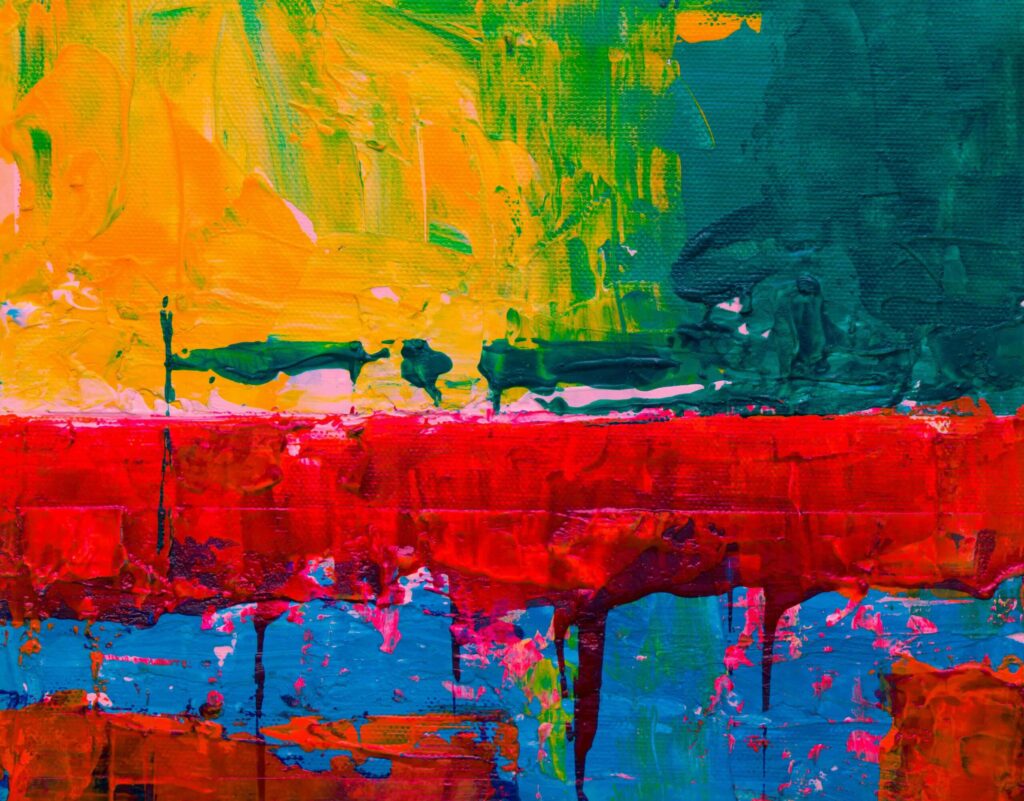
Abstract techniques, conversely, are concerned with subjective truth. The artist is not looking at a bowl of fruit; they are looking at the feeling of hunger, the vibration of the color red, or the rhythm of the light. In abstraction, the paint itself becomes the subject rather than a tool to describe something else.
2. Foundational Similarities in Oil Media
Despite their visual differences, both Abstract vs Realistic Oil Painting Techniques rely on the same chemical principles. Regardless of the style, an oil painting is a physical object made of pigment and drying oil.
At VimaGallery, we teach that “The Physics Don’t Change.” Whether you are painting a realistic portrait or an abstract color field, you must still manage drying times, lightfastness, and solvent use. Both styles require a strong understanding of how light interacts with translucent layers of paint—a concept known as “Optical Mixing.”
3. Realistic Techniques: The Science of Sight
Mastering Abstract vs Realistic Oil Painting Techniques requires a dedicated study of “Classical Realism.” This involves several specific technical stages:
- Sight-Size Drawing: The ability to render proportions accurately.
- Chiaroscuro: The dramatic contrast between light and dark to create volume.
- Glazing: Applying thin, transparent layers of oil paint to create a glowing effect that cannot be achieved with a single “alla prima” layer.
In realism, the “hand” of the artist is often hidden. The goal is a seamless transition of tones, requiring soft blending with high-quality sable or synthetic soft-hair brushes.
4. Abstract Techniques: The Language of Intuition
When we shift focus in the study of Abstract vs Realistic Oil Painting Techniques, we move toward “Action Painting” and “Color Field” methodologies.
In abstraction, the “mark” is everything. Artists use heavy impasto (thick paint), sgraffito (scratching into the paint), and “pouring” techniques. Here, the artist often uses “various solvents for oil painting” to create drips and runs that suggest movement. The texture of the canvas becomes a participant in the work.
5. The Role of Underpainting in Both Styles
A common misconception is that abstract paintings are “unplanned.” In reality, both Abstract vs Realistic Oil Painting Techniques benefit immensely from an Imprimatura or underpainting.
In realism, a “Grisaille” (monochrome grey) underpainting establishes the values before color is added. In abstraction, a vibrant underpainting can provide “peeking” colors that create a sense of history and depth within the final layers. This foundational layer is almost always “lean,” using more solvent and less oil to ensure a fast drying time.
6. Color Theory and Pigment Load
The application of color is a major differentiator in Abstract vs Realistic Oil Painting Techniques.
In realism, color is used to describe local light. The artist must mix “mud” colors—neutrals and greys—to make the highlights pop. In abstraction, color is often used at its highest “chroma” (intensity). An abstract artist might place a pure Cadmium Red next to a Phthalo Green to create “Simultaneous Contrast,” causing the colors to appear to vibrate.
Understanding the “pigment load” (the ratio of pigment to oil) is vital. High-quality professional paints are necessary for both styles to ensure that the colors do not fade over time.
7. Edges and Mark-Making: The Artist’s Fingerprint
If you look at the comparison of Abstract vs Realistic Oil Painting Techniques, the treatment of “edges” is the most revealing factor.
Realism relies on “Lost and Found” edges. By blurring the edge of a shoulder into a dark background, the artist directs the viewer’s eye to the face. In abstraction, edges are often “hard” and defined, emphasizing the flat nature of the canvas. The brushstroke is not a means to an end; it is the end itself.
8. Fat Over Lean: Structural Integrity
As we often discuss at VimaGallery, the “Fat Over Lean” rule is the most important technical hurdle for any oil painter. This applies to Abstract vs Realistic Oil Painting Techniques equally.
If an abstract artist applies a thick, oily impasto layer and then decides to paint a thin, solvent-heavy wash over it the next day, the painting will crack. The solvent in the top layer will “eat” into the oil below, and the different drying rates will pull the surface apart. Whether your style is representational or non-objective, you must build your “lean” layers first.
9. Tools of the Trade: Brushes and Palette Knives
The tools chosen for Abstract vs Realistic Oil Painting Techniques often define the final look.
- Realism: Round and Filbert brushes are preferred for their ability to blend. Soft mops are used to remove brushstrokes entirely.
- Abstraction: Large flats, house-painting brushes, and palette knives are common. Some abstract artists even use brayers (rollers) or squeegees to move large volumes of paint across the surface.
Learning how to clean these tools properly using artist-grade solvents is a skill we prioritize in our kids’ art classes and camps, ensuring students respect the longevity of their equipment.
10. Bridging the Gap: Semi-Abstraction
The most exciting territory in the world of Abstract vs Realistic Oil Painting Techniques is the middle ground. Artists like Richard Diebenkorn or even the later works of J.M.W. Turner show that you can have a “realistic” sense of light while using “abstract” brushwork.
This hybrid approach allows for the narrative power of realism with the emotional impact of abstraction. It requires a mastery of both worlds—knowing when to render a detail and when to let the paint speak for itself.
11. Conclusion: The VimaGallery Approach
In the end, the debate of Abstract vs Realistic Oil Painting Techniques is not about which style is “better.” It is about which toolset serves your vision today. At VimaGallery, we encourage our artists to experiment with both. Take a realistic portrait and “break” it with abstract strokes. Take an abstract field of color and try to “find” a realistic landscape within it.
By understanding the technical requirements of both styles—from the “Fat Over Lean” rule to the proper use of solvents—you ensure that your art, no matter how experimental, is built to last.
For more technical resources, you can consult the National Institutes of Health (NIH) for material safety or the Smithsonian Institution for historical perspectives on painting conservation.
Photo by Steve Johnson from Pexels