
Advantages and Disadvantages of Oil Paintings are topics of endless debate among fine artists, collectors, and students at VimaGallery. For over five centuries, oil paint has been the “gold standard” of the art world, favored by everyone from Leonardo da Vinci to contemporary abstract masters. However, the very characteristics that make oil paint prestigious—its slow drying time, its chemical complexity, and its rich texture—can also present significant challenges for the modern creator.
In this exhaustive guide, we will analyze the technical Advantages and Disadvantages of Oil Paintings to help you decide if this legendary medium is the right fit for your artistic vision and studio lifestyle.
Table of Contents
- The Prestige of Oil: A Brief Historical Context
- Top 5 Advantages of Oil Paintings
- Top 5 Disadvantages of Oil Paintings
- The Science of Oxidation vs. Evaporation
- Color Depth and “The Glow” Effect
- The Learning Curve: Why Beginners Struggle
- Studio Requirements: Safety and Ventilation
- Archival Longevity: The 500-Year Factor
- Cost Analysis: Is Oil Painting an Investment?
- Conclusion: Balancing the Pros and Cons
1. The Prestige of Oil: A Brief Historical Context
To understand the Advantages and Disadvantages of Oil Paintings, one must look back to the 15th century. Before the widespread adoption of oils, artists primarily used Egg Tempera. Tempera dried almost instantly, making blending nearly impossible. When Northern European masters like Jan van Eyck began refining oil binders, the art world changed forever.
Oil paint offered a flexibility that changed the human perception of reality in art. However, this prestige came with a trade-off: artists now had to deal with toxic solvents and paintings that took months to fully cure. At VimaGallery, we believe that knowing this history helps modern artists appreciate the medium’s “difficult” nature.
2. Top 5 Advantages of Oil Paintings
When we weigh the Advantages and Disadvantages of Oil Paintings, the “Pros” column is often led by the medium’s unparalleled aesthetic qualities.
I. Extended Working Time
The most famous advantage is the slow drying time. Because oil paint dries via oxidation rather than evaporation, it remains “open” on the canvas for days. This allows for seamless blending and “wet-on-wet” techniques that are impossible with acrylics.
II. Superior Color Depth
Oil binders have a unique refractive index. This means light travels through the layers of paint and bounces back, creating a “glow” from within.
III. Texture and Impasto
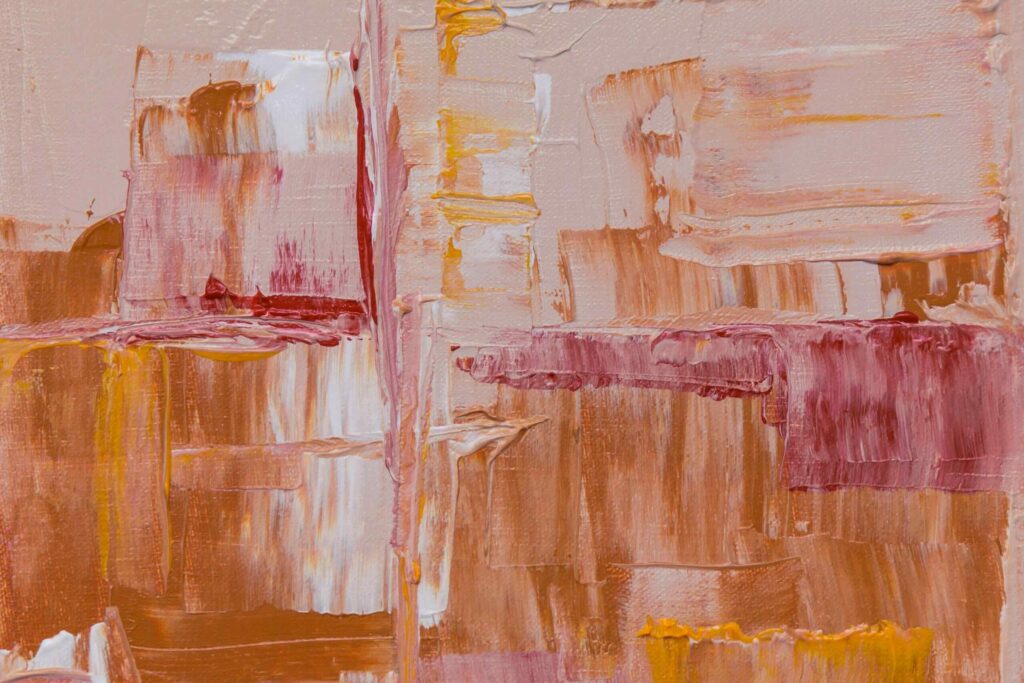
Oil paint holds its shape. If you apply a thick stroke with a palette knife, it stays exactly as you left it. This “texture” adds a three-dimensional quality to the work.
IV. Flexibility and Versatility
You can apply oil paint as a thin, watery glaze or a thick, heavy paste. This range makes it suitable for both “Abstract vs Realistic Oil Painting Techniques.”
V. Archival Permanence
When applied correctly following the “Fat Over Lean” rule, an oil painting can last for centuries without losing its structural integrity.
3. Top 5 Disadvantages of Oil Paintings
In the balance of Advantages and Disadvantages of Oil Paintings, the “Cons” usually revolve around logistics and health.
I. Long Drying and Curing Times
While slow drying is an advantage for blending, it is a disadvantage for deadlines. A heavily textured oil painting can take 6 to 12 months to be dry enough for a final varnish.
II. Chemical Toxicity
Traditional oil painting requires various solvents for oil painting like turpentine or mineral spirits. These can emit harmful VOCs (Volatile Organic Compounds) that require professional-grade ventilation.
III. The Complexity of “Fat Over Lean”
Oil painting is a science. If you ignore the rules of paint construction, your work will crack or delaminate. This technical barrier can be frustrating for hobbyists.
IV. Equipment Maintenance
You cannot simply rinse your brushes in the sink. The cleanup process involves solvents, oils, and specialized soaps, which can be time-consuming.
V. Higher Entry Cost
Professional-grade oil pigments, high-quality linens, and artist-grade solvents represent a significant financial investment compared to watercolors or acrylics.
4. The Science of Oxidation vs. Evaporation
A core part of the Advantages and Disadvantages of Oil Paintings is the chemistry of the binder. Acrylics dry by evaporation—the water leaves the paint, and it hardens. Oil paint, however, undergoes a chemical reaction with oxygen.
This means that as oil paint “dries,” it actually gains a tiny amount of weight from the absorbed oxygen. This slow transition is why oil paintings remain flexible for so long, but it’s also why they are prone to “yellowing” if kept in total darkness without UV light to assist the curing process.
5. Color Depth and “The Glow” Effect
One cannot discuss the Advantages and Disadvantages of Oil Paintings without mentioning the visual “richness.” Because the oil binder is translucent, light can penetrate several layers of pigment. This creates a “luminescence” that digital screens and other media struggle to replicate. At VimaGallery, we often show students how a single layer of transparent Alizarin Crimson over a white ground creates a depth of red that is startlingly lifelike.
6. The Learning Curve: Why Beginners Struggle
The Advantages and Disadvantages of Oil Paintings become very apparent in the first few weeks of study. Beginners often struggle with “muddy colors.” Because the paint stays wet, it is very easy to accidentally mix opposing colors on the canvas, leading to a dull, grey mess.
Learning how to “layer” without disturbing the paint underneath is a skill that takes months of practice. This is why our kids’ art classes and camps often start with simplified oil methods, teaching the patience required for this medium.
7. Studio Requirements: Safety and Ventilation
A major entry in the “Disadvantages” column of Advantages and Disadvantages of Oil Paintings is the studio environment. You cannot safely paint with oils in a small, unventilated closet.
Exposure to solvent vapors can cause headaches, dizziness, and long-term respiratory issues. However, modern innovations like Gamsol (Odorless Mineral Spirits) have significantly mitigated these risks, making oil painting accessible to those without industrial-sized studios.
8. Archival Longevity: The 500-Year Factor
When considering the Advantages and Disadvantages of Oil Paintings, longevity is a massive “Pro.” We have oil paintings from the 1400s that still look vibrant today. Oil paint is incredibly durable once it has fully cured.
However, this longevity depends on the support. Unlike acrylics, which can be painted on almost anything, oil paint contains acids that will eventually “eat” through raw canvas or paper. This means every surface must be properly primed with Gesso, adding another step to the process.
9. Cost Analysis: Is Oil Painting an Investment?
Finally, we must look at the financial Advantages and Disadvantages of Oil Paintings. A single 37ml tube of genuine Cobalt Blue can cost $40 or more. When you add the cost of brushes, easels, and solvents, the price of entry is high.
But there is a flip side. Because oil paintings are perceived as “higher value” in the art market, they typically command higher sale prices than works on paper or acrylics. For a professional artist at VimaGallery, the high cost of materials is often offset by the higher market value of the finished masterpiece.
10. Conclusion: Balancing the Pros and Cons
The Advantages and Disadvantages of Oil Paintings reveal a medium that is as demanding as it is rewarding. It is a slow, tactile, and deeply scientific way of making art. While the toxic solvents and long drying times can be seen as drawbacks, they are the very things that allow for the blending and depth that have defined Western art for centuries.
At VimaGallery, we encourage you to embrace the “Cons” as part of the ritual of painting. The time spent waiting for a layer to dry is time spent reflecting on your next move. The care taken in cleaning your brushes is a sign of respect for your craft.
For further reading on the safety of artist materials, please visit the National Institutes of Health (NIH) or explore the Smithsonian’s archives on oil painting conservation.